
Heating & cooling · By Kenji Watanabe · September 9, 2025
Is a heat pump right for an Ohio house?
Ten years ago I'd have said "maybe, with caveats." Today, for a lot of Central Ohio homes, the answer is yes. Here's what changed and how to tell whether your house is a good fit.
What a heat pump actually does
A heat pump is an air conditioner that can run in reverse. In summer it pulls heat out of your house and dumps it outside, exactly like central air. In winter it pulls heat out of the outdoor air (yes, even cold air has heat in it) and moves it inside. Because it's moving heat rather than making it, a heat pump can deliver two to three units of heat for every unit of electricity it uses. A gas furnace, by comparison, tops out around 0.96 units of heat per unit of gas.
The catch has always been cold weather. As it gets colder outside, there's less heat to grab, and older heat pumps would lose capacity fast and lean on expensive electric resistance strips. That's where the reputation came from: "heat pumps blow cold air" and "they don't work up north." For the equipment of 2005, that was mostly fair.
What changed
Modern cold-climate heat pumps use variable-speed (inverter) compressors that ramp up and down instead of slamming on and off. The good ones deliver most of their rated heating capacity at 5°F and keep producing heat well below zero. I keep a spreadsheet of the systems we've installed since 2018, and the numbers back that up: during the cold snap last January, when it hit -4°F one morning in Powell, our customers' cold-climate units kept their houses at setpoint with only brief help from backup heat.
Central Ohio is actually a pretty friendly climate for heat pumps. Our average winter temperature hovers in the low 30s, and we only see a handful of nights each year below 10°F. Most of the heating season is spent in the range where a heat pump is at its most efficient.
All-electric or dual-fuel?
There are two common ways we set these up:
All-electric: a cold-climate heat pump with electric backup heat strips in the air handler for the coldest hours. Good for homes without natural gas, or homeowners who want to get off gas entirely.
Dual-fuel (hybrid): a heat pump paired with a gas furnace. The heat pump handles cooling and most of the heating, and the furnace takes over when it's very cold or when gas becomes cheaper to run than electricity. The thermostat makes the switch automatically. This is what we install most often around here, especially when the existing furnace is young enough to keep.
Dual-fuel is a nice middle path. You get most of the efficiency gain, a fallback you trust, and you don't have to replace a perfectly good furnace.
What it costs, and what it saves
Heat pump systems from K&D start at $8,500 installed. For comparison, an air conditioner replacement starts at $5,900, and if your AC is near the end of its life anyway, the real cost of choosing a heat pump instead is the difference between the two. That's the moment when a heat pump makes the most financial sense.
Savings depend heavily on what you heat with now:
- Electric baseboard or an old electric furnace: big savings, often cutting heating costs in half or more.
- Propane or heating oil (common out toward Plain City and Marysville): usually significant savings.
- Natural gas: modest savings at today's prices, more with a dual-fuel system set up smartly. The comfort benefits and cooling efficiency are often the bigger draw.
Ask us about current utility rebates and federal tax credits for heat pumps. They change from year to year and the paperwork can be fussy, so we'll help you figure out what you qualify for and fill out the forms. Financing is available too, including 0% for 18 months on systems over $5,000 with approved credit.
Is your house a good fit?
The best candidates usually have:
- An air conditioner that's 12+ years old or already failing.
- Ductwork in decent shape and properly sized. (We check this. A heat pump moves air more gently than a furnace, so leaky or undersized ducts matter more.)
- Reasonable insulation and air sealing. A drafty house makes any system work harder.
- Electric, propane or oil heat now, or a gas furnace you want to keep as backup.
Houses with no ducts at all, like older homes heated by a boiler and radiators, can still use heat pumps in the form of ductless mini-splits, which start at $4,200 per zone. I've done whole-house mini-split systems in 1920s homes in Grandview that used to have window units in every bedroom.
Sizing is everything
The most common mistake I see is a heat pump sized by rule of thumb ("you have 2,000 square feet, you need a 4-ton"). We do a room-by-room load calculation on every system we design, because a heat pump that's too big short-cycles and leaves the house clammy in summer, and one that's too small leans on backup heat all winter. Dana is famous around here for talking people down a size, and she's usually right.
Questions people ask me
Will it be noisy?
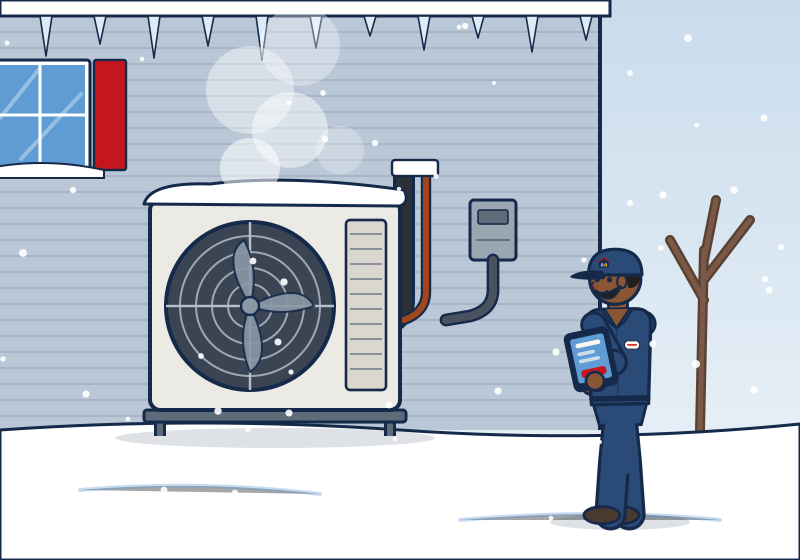
Modern variable-speed outdoor units are quieter than most old air conditioners. In winter you'll occasionally hear a whoosh during defrost, and you may see a little steam rise off the unit. That's normal.
Does the air feel warm?
Heat pump air comes out cooler than furnace air, around 90 to 100°F instead of 120 to 130°F, but the system runs longer and more evenly. Most people say the house feels more consistent.
How long do heat pumps last?
About 15 years with annual maintenance, similar to central air. Because it runs year-round, the yearly tune-up matters. Comfort Club members get that covered.
The next step
If you're curious, have us out for a free estimate. I'll look at your current system, your ducts and your electric panel, run the load calculation, and give you written prices for a heat pump and a conventional replacement side by side. I'll also answer every question you've got. Ask anyone who's had me out: I'm not in a hurry.
Thinking about a heat pump? Call (614) 555-0187 or book a free estimate.
Back to the blog · Related: Heat pumps · Ductless mini-splits · Financing