
Water heaters · By Agnes Kowalczyk-Reyes · March 18, 2025
Tank vs. tankless: which water heater should you buy?
Endless hot water is a real thing, and so is a bigger bill up front. Here's how I talk customers through the decision, without the sales pitch.
The question we get every week
When a water heater dies, the first call is usually "how fast can you get here?" and the second is "should I go tankless?" It's a fair question. Tankless heaters have gotten better, more reliable and more common in the last decade. But they are not the right answer for every house, and anyone who tells you otherwise is probably selling one.
Here's the honest version.
How each one works
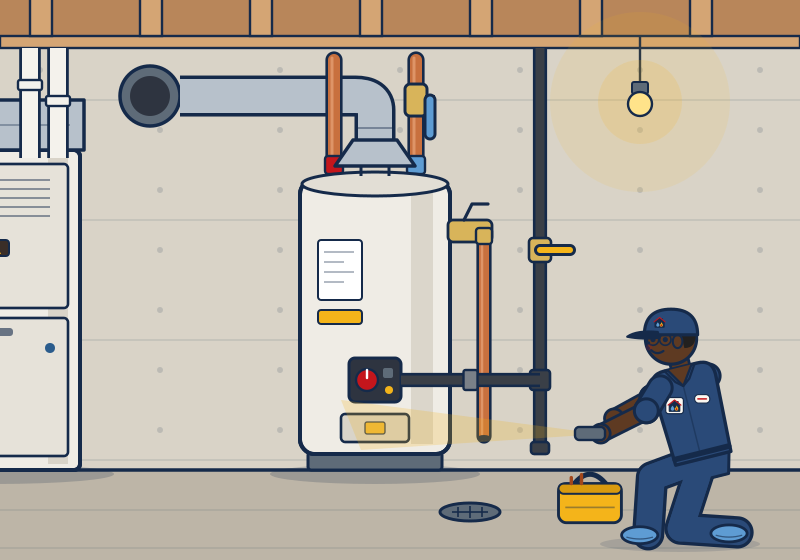
A tank water heater keeps 40 or 50 gallons of water hot around the clock, ready to go. When you use it up, it takes a while (30 to 60 minutes, depending on the unit) to recover. Most Central Ohio houses have one, gas or electric, sitting in the basement or utility room.
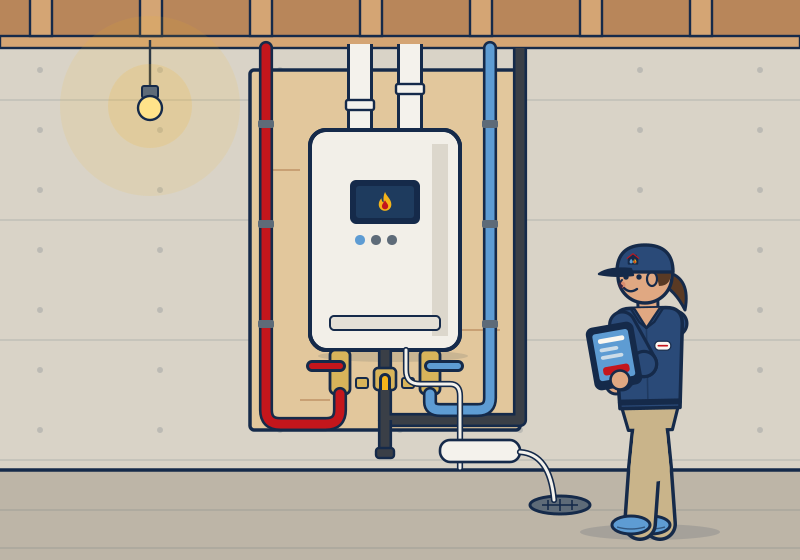
A tankless water heater heats water only when you turn on the tap. Water flows through a heat exchanger, a powerful burner fires, and hot water comes out the other side for as long as you need it. No tank, no standby heat loss, and no running out halfway through the third shower.
What they cost
| Tank (gas, 40-gal) | Tankless (gas) | |
|---|---|---|
| Installed price | Starting at $1,695 this spring | From $3,900 |
| Typical lifespan | 8–12 years | 18–20+ years |
| Hot water supply | Limited to the tank, then recovery time | Continuous, limited by flow rate |
| Energy use | Keeps water hot 24/7 | Heats only on demand; often 20–30% less gas |
| Maintenance | Flush yearly, check anode rod | Descale yearly (important in our water) |
| Space | About 2 feet of floor space | Suitcase-sized, on the wall |
Tankless prices vary more than tank prices because the installation varies more. The unit itself costs more, but the bigger swings come from what the house needs: a larger gas line, new venting, a condensate drain, or a dedicated electrical outlet.
The gas line question
This is the part most people don't hear about until the estimate. A typical 40-gallon gas tank uses around 40,000 BTUs. A whole-house tankless unit can use 150,000 to 199,000 BTUs when it's running full blast. Many older homes in Upper Arlington, Grandview and Worthington have a half-inch gas line feeding the water heater that simply can't deliver that much.
That doesn't rule tankless out. It means we may need to run a bigger line from the meter, and the gas meter itself sometimes needs an upgrade from the utility. We'll check all of this on the estimate visit, which is free, and you'll get the full price before you decide.
Our water is hard on tankless heaters
Central Ohio water ranges from moderately hard to very hard depending on your source, and private wells out toward Plain City and Marysville can be harder still. Minerals build up inside a tankless heat exchanger the way they build up in a coffee maker. Left alone, scale cuts efficiency and eventually trips error codes or shuts the unit down.
The fix is simple: a yearly descaling, which takes about an hour, and in harder-water homes, a water softener or scale-prevention filter. Skip it and that 20-year lifespan shrinks fast. A tank heater suffers from hard water too (that's the rumbling and popping you hear from sediment on the bottom), but it's more forgiving.
Who should go tankless
- Families who run out of hot water regularly: teenagers, big households, deep soaking tubs.
- People planning to stay in the house 10 years or more, so the energy savings and longer life pay back the higher price.
- Homes that need the floor space, like a finished basement where the water heater is in the way.
- Anyone who already has adequate gas service, which lowers the install cost a lot.
Who should stick with a tank
- Households of one or two with modest hot water use. The savings won't justify the cost.
- People planning to sell in the next few years.
- Homes where a gas line upgrade would add significant cost.
- Anyone who needs hot water back today. Tank replacements are usually same-day if you call us by noon; tankless installs typically take a little more planning.
A few things people don't expect
The "cold water sandwich." With tankless, if you turn the shower off and back on quickly, you may get a brief shot of cool water while the burner fires back up. Most people stop noticing within a week.
Minimum flow. A tankless unit needs a minimum flow to fire. A trickle of hot water for shaving may not trigger it. Newer units handle this better than older ones.
Power outages. Gas tankless heaters need electricity for their controls and fans. No power, no hot water. Many gas tank heaters with standing pilots keep working in an outage.
Electric tankless. Whole-house electric tankless units need a very large electrical service, often more than an older home has. For most of our customers with electric water heaters, a 50-gallon electric tank (from $1,795 installed) or a heat pump water heater is a better fit.
The bottom line
If your tank heater is working fine, don't rush to replace it. If it's over ten years old, rusting at the base, or rumbling like a cement mixer, start thinking now so you can choose on your schedule instead of in a cold shower.
Either way, we'll come out, look at your gas line, venting and water, and give you a written price for both options so you can compare apples to apples. Every new water heater we install is covered by the K&D Promise: 10 years parts, 2 years labor.
Water heater on its last legs? Call (614) 555-0187 or book a free estimate.
Back to the blog · Related: Water heater services · Financing