
Heating · By Dana Kowalczyk · October 14, 2024
What that furnace noise means
The first cold night of fall, the furnace kicks on for the first time in months and makes a sound you've never heard. Here's how to tell "that's normal" from "call somebody."
First: safety
If you smell gas (a rotten-egg smell), don't touch the thermostat or any switches. Get everyone out of the house, then call 911 and your gas utility's emergency line from outside. If your carbon monoxide alarm goes off, get everyone outside into fresh air and call 911. Don't go back in until responders say it's safe. Every house with a gas furnace should have working CO alarms on each level and near the bedrooms.
Everything else on this list is a matter of "how soon," not "how scared." Most furnace noises are wear and tear, and a lot of them are cheap fixes if you catch them early.
Sounds that are usually normal
- A soft click when the thermostat calls for heat, then a whoosh as the burners light. That's the system working exactly as designed.
- A hum from the blower once it's running. Steady and even is fine.
- Ticking or light popping in the ducts as they heat up and cool down. Metal expands. It's especially noticeable in the first few cycles of fall.
- A burning-dust smell for the first hour or so of the season. Dust settles on the heat exchanger over summer and burns off. If it doesn't fade after a few cycles, or smells like burning plastic or wiring, shut it off and call.
Sounds that need a tech soon
Squealing or screeching
Usually the blower motor bearings or, on older furnaces, a worn or loose belt. It won't fix itself and tends to get louder. A motor that's straining can overheat and fail, usually on the coldest night of the year.
Rapid clicking without the burners lighting
Often the igniter or flame sensor. The furnace tries to light, can't confirm a flame, and shuts down to be safe. A dirty flame sensor is one of the most common calls we run in October, and cleaning it is part of every tune-up.
Rattling or banging metal
Could be as simple as a loose access panel or a duct that's come unhooked. It could also be a loose blower wheel or a motor mount. Check that the front panel is seated properly first; if the rattle persists, have it looked at.
Whistling
Most often a clogged filter, which makes the system strain for air. Change it and see if the whistle goes away. If not, you may have a duct leak or a closed register somewhere. This one is the easiest fix on the list, and also the most ignored.
Loud humming or buzzing from the cabinet
An electrical component like a capacitor, transformer or relay may be failing. Not an emergency, but don't let it go for weeks.
Short cycling (on, off, on, off)
Not a noise exactly, but you'll hear it. The furnace starts and stops every few minutes. Causes range from a dirty filter or overheating to a thermostat in a bad spot or a furnace that's too big for the house. It wastes energy and wears parts out faster.
Sounds that mean shut it off and call now
- A boom or loud bang when the burners light. This is delayed ignition: gas builds up for a moment before it lights. It can crack a heat exchanger over time. Turn the furnace off at the thermostat and call us.
- Grinding metal. Usually a motor bearing that's failed. Running it can destroy the motor or the blower wheel.
- Any noise combined with a burning or electrical smell. Shut it down.
- A furnace that keeps tripping its breaker. Don't keep resetting it. Something's drawing too much current.
No heat, or a noise that scares you? Call (614) 555-0187, day or night. After-hours dispatch is $149, waived for Comfort Club members.
What you can check yourself
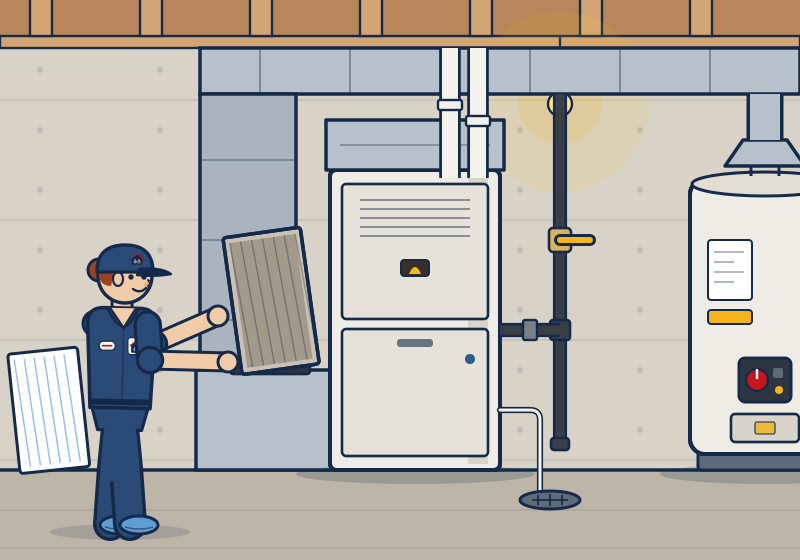
- The filter. Pull it out and hold it up to a light. If you can't see light through it, replace it. One-inch filters every one to three months; thicker media filters every six to twelve.
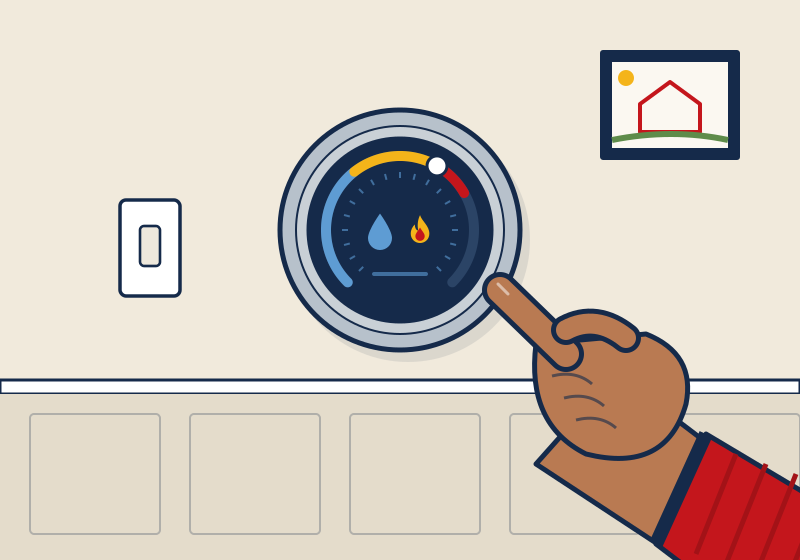
- The thermostat. Set to Heat, set a few degrees above room temperature, batteries fresh.
- The furnace switch. There's a switch that looks like a light switch on or near the furnace. Somebody always turns it off by accident.
- The breaker. If it's tripped, reset it once. If it trips again, leave it off and call.
- The front panel. Furnaces have a safety switch that won't let them run with the blower door off. Make sure it's on snug.
- The outdoor vent. On high-efficiency furnaces, two white plastic pipes exit through the wall. Make sure they're not blocked by leaves, snow or a wasp nest.
Please don't take apart the burner assembly, bypass a safety switch, or keep resetting a furnace that keeps shutting itself off. Those safeties are there for a reason, and I've seen what happens when they get jumped.
The best way to avoid all of this
I spent eight years keeping heating systems running for the Air Force, and the lesson I brought home is that maintenance beats repair every time. A furnace tune-up is $129 and covers cleaning the flame sensor and burners, checking the heat exchanger for cracks, testing safety controls, measuring gas pressure and temperature rise, and oiling or checking the blower. Most of the noises above get caught during a tune-up, before they turn into a no-heat call.
Or join the Comfort Club for $199 a year and get your furnace and AC tune-ups, 15% off repairs, priority scheduling and no after-hours fees. We'll call you when it's time.
Back to the blog · Related: Furnace repair & replacement · Comfort Club