
Winter prep · By Stan Kowalczyk with Terrence Booker · December 4, 2023
The frozen pipes checklist
In the winter of 1994 I thawed 61 frozen pipes in nine days. Most of them didn't have to freeze. Here's what I've learned since, with help from T, who has fixed a few thousand more.
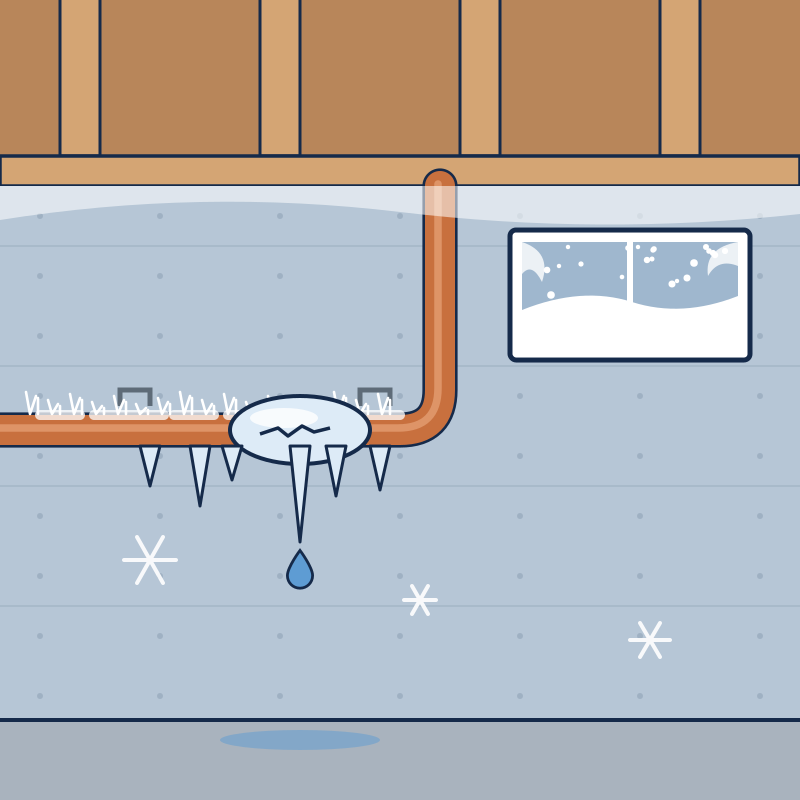
Why pipes freeze (and why they burst)
Water expands when it freezes. A pipe full of ice builds up pressure between the ice plug and the closed faucet, and eventually something gives. Usually it's a split in the pipe, sometimes a fitting, and it often isn't where the ice is. That's why so many burst pipes don't start leaking until they thaw: the crack is already there, and the ice is the only thing holding the water back.
In Central Ohio the trouble starts when temperatures drop into the teens, especially with wind. The pipes at risk are almost always the same ones: in exterior walls, crawlspaces, unheated garages, attics, under kitchen sinks on outside walls, and the line to the outdoor spigot.
Before winter: the fall checklist
- Disconnect garden hoses. A hose left on the spigot traps water in the faucet, and that's the most common frozen pipe we see. Even "frost-free" spigots freeze with a hose attached.
- Shut off and drain outdoor spigots. If you have indoor shut-off valves for the hose bibs (usually in the basement ceiling near the wall), close them, then open the outdoor faucet to let it drain. Leave the outside faucet open all winter.
- Insulate exposed pipes. Foam pipe sleeves from the hardware store are cheap and easy to put on pipes in crawlspaces, garages and unfinished basements near exterior walls.
- Seal the drafts. Look for cold air coming in where pipes and wires pass through the foundation or rim joist. A can of spray foam closes most of them.
- Close crawlspace vents if your house has them, once it's consistently cold.
- Drain the sprinkler system and any outdoor lines to a pool, pond or shed.
- Find your main water shut-off and make sure it works. If you don't know where it is, read our post on how to shut off your water. This is the most important thing on this list.
- Get your furnace tuned up. A furnace that quits on a 5-degree night is how a lot of frozen pipes happen.
When a cold snap is coming
- Let faucets on exterior walls drip. A slow drip of both hot and cold, about the size of a pencil lead, keeps water moving and relieves pressure. Yes, it uses some water. It's a lot cheaper than a burst pipe.
- Open cabinet doors under kitchen and bathroom sinks on outside walls so warm room air can reach the pipes.
- Keep the heat at 55°F or higher, even at night and even if you're away. Don't turn the heat way down to save money during a cold snap.
- Keep the garage door closed if there are water lines in the garage.
- Leave interior doors open so heat reaches all the rooms, especially back bedrooms and bathrooms over the garage.
- Going away? Ask a neighbor to check the house daily, or shut off the main water and open the faucets to drain the lines before you leave.
If you think a pipe is frozen
The sign is simple: you turn on a faucet and nothing comes out, or just a trickle, while other faucets work fine. Sometimes you'll see frost on the pipe or a bulge.
- Leave the faucet open. As the ice melts, running water helps melt the rest, and an open faucet relieves pressure.
- Find the frozen section if you can. It's usually where the pipe runs along an outside wall or through a cold space.
- Apply gentle heat: a hair dryer, a space heater placed safely away from anything that can burn, warm towels, or an electric heating pad. Start nearest the faucet and work back toward the frozen spot.
- Keep at it until full pressure returns. Then check every faucet in the house; if one pipe froze, others may have too.
Never use an open flame (a propane torch, a kerosene heater, a charcoal grill) to thaw a pipe. Every winter somebody in Central Ohio starts a fire this way. T has personally seen three scorched rim joists and one burned-out crawlspace. Don't be number five.
If you can't find the frozen spot, or it's inside a wall or ceiling you can't reach, call us. We have thawing equipment that works without opening walls in most cases.
If a pipe bursts
- Shut off the main water valve right away.
- Turn off the water heater (gas to "pilot" or "off"; electric at the breaker) if you've shut off the main for more than a short while.
- Stay clear of water near electrical outlets or the panel. If you can't safely reach the breaker, wait for help.
- Open faucets to drain the remaining water from the lines.
- Start drying out: towels, a wet vac, fans. Take photos for your insurance company before you move things.
- Call us at (614) 555-0187. A real person answers around the clock and can send a tech. After-hours dispatch is $149, and it's waived for Comfort Club members.
Fixing it for good
If the same pipe freezes every winter, it's telling you something. Common permanent fixes include rerouting the line away from an exterior wall, adding insulation and air sealing to the space around it, installing a true frost-free spigot, or adding a self-regulating heat cable on a pipe in a crawlspace. T can usually tell you which one makes sense in about ten minutes of looking around with a flashlight.
I've been doing this since before most of our technicians were born, and I'll tell you what I tell everyone who calls on a Saturday morning in January: the five minutes you spend in October with a hose and a can of spray foam will save you a very long night in February.
Frozen or burst pipe? Call (614) 555-0187, 24/7.
Back to the blog · Related: 24/7 emergency service · Leaks & repipes