
Plumbing basics · By Agnes Kowalczyk-Reyes · January 8, 2024
How to shut off your water (before you need to)
The single most useful plumbing skill a homeowner can have takes about five minutes to learn. Learn it on a calm Saturday, not at 2 a.m. with water coming through the ceiling.
Why this matters
A burst half-inch supply line can put out several gallons a minute. In the twenty or thirty minutes it takes even the fastest plumber to get to your house, that's a lot of water in your drywall, your carpet and your basement. Our dispatchers walk people to their shut-off valve over the phone almost every week, and the calls that end with the least damage are always the ones where somebody in the house already knew where to go.
So here's my request: read this, then go find your valve today. Show everyone in the house who's old enough to turn it. Hang a tag on it. It's the cheapest insurance you'll ever buy.
Step 1: Find the main shut-off
Your main shut-off valve controls all the water coming into the house. Where it lives depends on how and when the house was built.
- Houses with basements (most of Hilliard, Upper Arlington, Worthington and Grandview): look on the basement wall that faces the street. The water line usually comes through the foundation wall or up through the floor near the front of the house. The valve is right there, typically within a foot or two of the water meter.
- Slab and crawlspace houses (common in newer parts of Dublin, Powell and Grove City): check the utility room or garage near the water heater, a closet on an outside wall, or the crawlspace access. Some newer homes have the main valve in a small access panel in the garage wall.
- Finished basements: someone may have boxed the valve in behind a removable panel or inside a closet. If it's been drywalled over completely, call us. That's a problem worth fixing before there's an emergency.
There's also a valve at the curb or in your yard, in a small round or rectangular box with a metal lid. That one usually belongs to the water utility and needs a special key. Leave it to them unless you've been told otherwise. Your inside valve is the one you want.
Step 2: Know what kind of valve you have
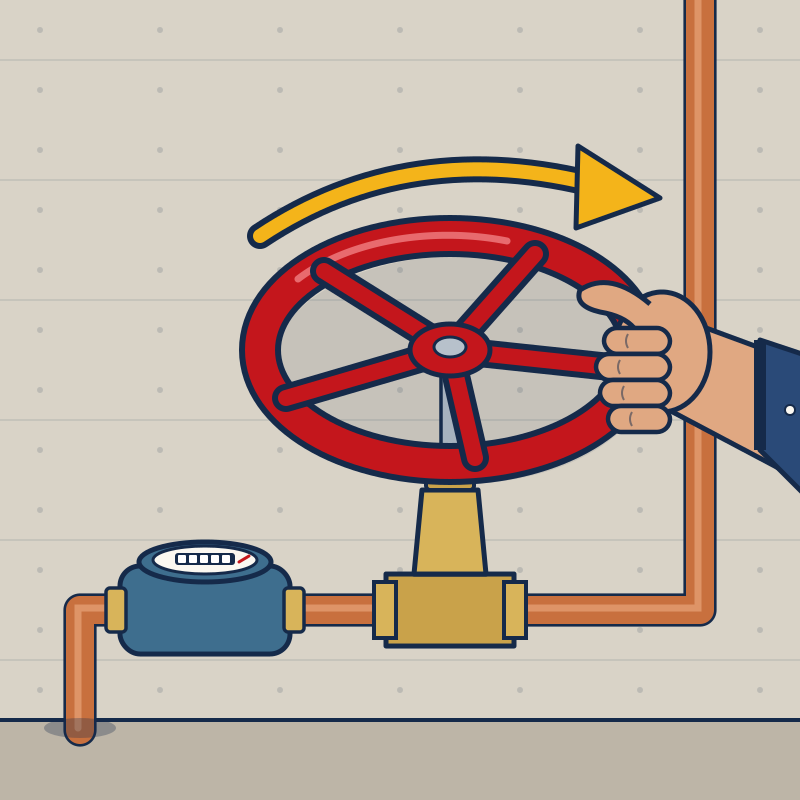
Gate valve (round handle, like a garden spigot)
Common in houses built before the 1990s. Turn the wheel clockwise, "righty-tighty," until it stops. It may take several full turns. Don't force it past snug; old gate valves can strip internally, and then they don't shut off at all.
Ball valve (straight lever handle)
Common in newer houses and anywhere we've replaced a valve. A quarter turn does it. When the lever is parallel to the pipe, water is on. When it's crosswise to the pipe, water is off. Simple, and much more reliable.
Step 3: Test it
- Turn the main valve off.
- Open a faucet on the top floor and one in the basement. Water should slow to a trickle and stop within a minute or so.
- If water keeps running steadily, the valve isn't sealing. Make a note and give us a call.
- Turn the valve back on slowly. Opening it fast can send a pressure jolt through old pipes.
- Let the faucets run until the sputtering air clears, then close them.
If your gate valve hasn't been touched in twenty years, be gentle. If it's stuck, don't reach for a pipe wrench or a cheater bar. A snapped valve stem at the main is a genuine emergency. We'd much rather replace a stuck valve on a scheduled visit. Swapping an old gate valve for a quarter-turn ball valve is one of the most common small jobs we do.
The other valves worth knowing
You don't always need to shut off the whole house. Most fixtures have their own valves:
- Toilets: a small oval or round handle on the wall or floor behind the toilet. Turn clockwise. This is the one to grab when the bowl is about to overflow.
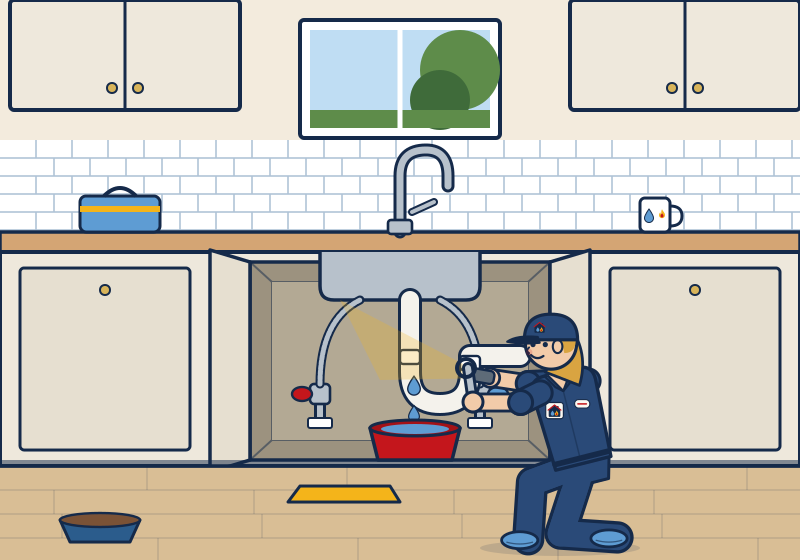
- Sinks: two small valves under the sink, one for hot and one for cold.
- Water heater: a valve on the cold water line coming into the top of the tank. Shut it if the tank itself is leaking. For a gas heater, also turn the gas control to "off" or "pilot"; for electric, shut the breaker.
- Washing machine: two valves (or a single lever) on the wall behind the washer. Rubber washer hoses are one of the most common sources of flooding we see. If yours are more than five years old, replace them with braided stainless.
- Refrigerator and ice maker: often a small valve under the kitchen sink or in the basement ceiling below the fridge.
- Outdoor spigots: many older homes have an indoor shut-off for each hose bib, usually in the basement ceiling near the wall. Close them each fall and open the outdoor spigot to drain the line. That one step prevents a lot of the frozen-pipe calls we get in January.
If water is coming in right now
- Shut off the nearest fixture valve, or the main if you can't find the source.
- If water is near outlets, cords or the electrical panel, stay out of the water and shut off the power to that area at the breaker panel only if you can reach it from a dry spot. If you can't, wait for help.
- Open a faucet at the lowest point in the house to drain the pressure out of the pipes.
- Move valuables out of the way and start soaking up water. Take photos for your insurance.
- Call us at (614) 555-0187. A real person answers 24/7, and they'll stay on the line with you if you need help finding the valve.
A five-minute homework assignment
Here's what I ask every customer to do. Find the main. Test it. Tie a bright tag on it that says "MAIN WATER SHUT-OFF." Then walk your spouse, your teenagers, your house sitter, whoever, to the spot and have them turn it themselves. My dad has been preaching this since 1987, and he's right. It's the difference between a mop and a contractor.
And if you find a valve that's stuck, leaking, buried behind drywall or simply missing, we'll take care of it. A main valve replacement is a quick, inexpensive job compared with the alternative.
Stuck valve or no valve at all? Book a visit or call (614) 555-0187.
Back to the blog · Related: The frozen pipes checklist · 24/7 emergency service