
Plumbing · Water treatment
Hard water is hard on everything. Let's test yours first.
Spotty glasses, crusty showerheads and a water heater full of sediment are all signs of hard water, and most of Central Ohio has it. We start with a free in-home water test, then recommend only what your water actually needs.
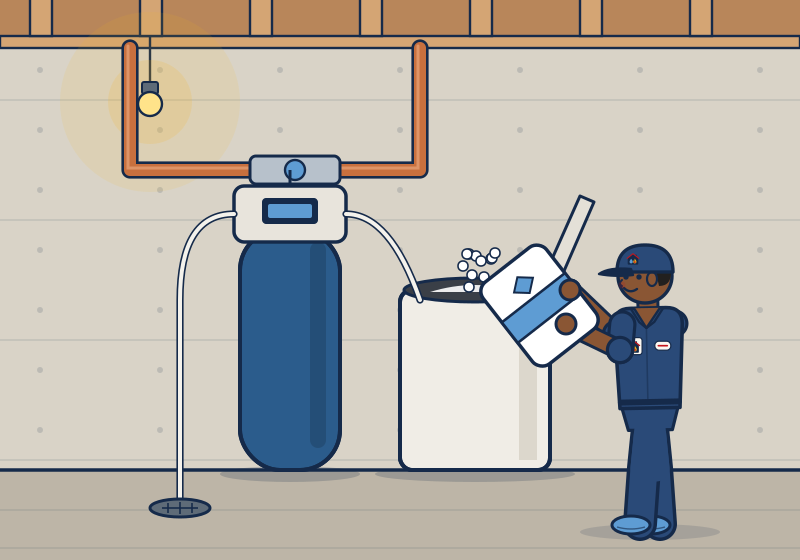
Signs your water needs treatment
- White, chalky scale on faucets, showerheads and glass shower doors.
- Spots on dishes straight out of the dishwasher.
- Soap and shampoo that won't lather, and skin that feels dry after a shower.
- A water heater that pops and rumbles from mineral sediment in the tank.
- Orange or brown stains in sinks and toilets, a sign of iron, more common on private wells around Plain City, Marysville and rural Powell.
- A chlorine taste or smell from city water, or a sulfur ("rotten egg") smell from a well.
Hard water isn't a health problem. It's a wear-and-tear problem. Minerals build up inside pipes, water heaters, dishwashers and tankless units and shorten their lives, and you use more soap and detergent fighting them.
What happens on the visit
- Free water test. We test hardness, iron, pH and chlorine at your kitchen tap, right in front of you. Well owners get a couple of extra tests.
- Look at your plumbing. Where the water comes in, where a softener would fit, whether there's a drain and an outlet nearby, and how many people live in the house.
- Recommend and quote. Sometimes that's a softener. Sometimes it's just a filter at the kitchen sink. Sometimes it's nothing at all, and we'll tell you so.
- Install. We add a bypass valve so you can turn the system off without shutting off your water, set it up for your water, and show you how to add salt.
Options and posted prices
| System | Installed price | What it does |
|---|---|---|
| In-home water test | Free | Hardness, iron, pH and chlorine |
| Water softener | from $1,650 | Removes hardness minerals for the whole house; sized to your household and water |
| Whole-house filter | from $1,100 | Reduces chlorine taste and smell and sediment at every tap |
| Under-sink reverse osmosis | from $595 | Filtered drinking and cooking water at the kitchen sink, with its own faucet |
| Softener service or repair | $89 service call, applied to the repair | Resin, valve and brine tank problems on most brands |
Iron and sulfur treatment for wells is quoted after testing. Systems from all major manufacturers are available; we stock the ones we've found easy to service. New systems are covered by the K&D Promise.
City water or a private well?
Most of our customers in Hilliard, Dublin, Upper Arlington and Columbus are on municipal water. It's treated and safe to drink, but it's still hard, and some households don't care for the chlorine taste. Out toward Plain City, Marysville and the rural edges of Powell, more homes are on private wells, where iron, sulfur and sediment are common. Well water should also be lab-tested for bacteria and nitrates from time to time; we can point you to how to arrange that and treat what the results show.
How long it takes
The water test takes about 20 minutes. A softener or whole-house filter installation usually takes three to four hours; your water will be off for part of that. An under-sink system is about two hours. Most installs can be scheduled within a week of the test.
Living with a softener
A softener needs salt. Most households in our area add a 40-pound bag every four to eight weeks; we'll set the system to be efficient with it. Every few years, it's worth having us check the valve and clean the brine tank. If you have a water heater and a softener, you'll notice the heater stays quieter and the tank lasts longer. Tankless owners especially benefit, since scale is the number one reason tankless heaters need service.
One thing we always do: leave the outdoor hose spigots on hard water. No sense softening the water for your lawn.
What you can do right now
Softener leaking or flooding the floor? Turn the bypass valve on the softener's head to "bypass" (usually a push button or a lever that sits across the pipe). That stops water going through the system without shutting off water to the house. Unplug the unit. If you can't find a bypass, close the main water shut-off and call us.
Questions about your water? Call (614) 555-0187 or text (614) 555-0199.
Water treatment questions
Is softened water safe to drink?
For most people, yes. A softener adds a small amount of sodium. If you're on a low-sodium diet, an under-sink reverse osmosis system at the kitchen tap removes it, or we can leave the kitchen cold tap on unsoftened water.
Is the water test really free?
Yes. No charge and no obligation. If your water is fine, we'll say so and leave.
Do you service softeners you didn't install?
We service most major brands. Some older units are hard to find parts for; we'll tell you if it's time to replace.
Will a softener fix low water pressure?
No. Low pressure usually points to old galvanized pipe, a failing pressure regulator or a partially closed valve. See leaks and repipes.